
Article
Wow, why isn't anyone talking about this
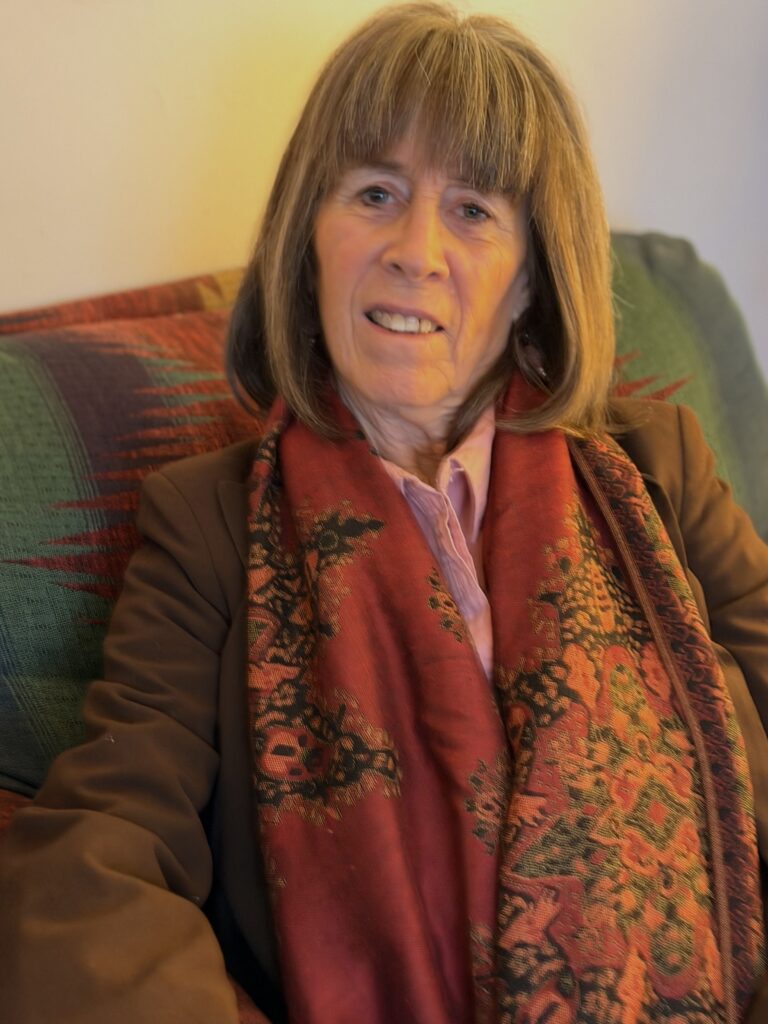
BENNINGTON — Local Shaftsbury author Christa Jan Ryan announced the release of her memoir, “Silent Scream from the Hamptons,” which will be available in local bookstores this month.
Ryan begins her memoir by introducing readers to the concept of “disease of the family of origin,” referring to the often intergenerational transference of dysfunction – where patterns of neglect, hurt, sorrow, guilt, shame, pain, chaos, and trauma pass secretly and stealthily from one generation to another. While not necessarily a genetic medical diagnosis, the patterns and tendencies pass from parent to child in a cyclical loop of learned behavior, generation to generation until the cycle is finally broken, and healing begins.
In Ryan’s “Silent Scream from the Hamptons,” Ryan speaks directly – immersing the reader in her lived experience. Her writing is straightforward, emotional, and humorous in an exposing and self-deprecating way.
Opening with a prologue set in the Hamptons in the year 2000, the reader is taken on a brief and voyeuristic journey into a scene from the dysfunctional marriage and business partnership of Ryan and her husband, featuring its rash display of temper and turmoil. The tension is left unresolved, as Ryan speeds away, watching “the image of my red-faced, wine-drenched husband shaking his fist in my rearview mirror.”
The moment seems inconsequential and Ryan effortlessly shifts to resuming her plans for the day – visiting her convalescing mother.
And, it is here, at her mother’s bedside – listening to her mother recall memories of the past – that Ryan experiences an epiphany.
“As I sit rubbing both her hands, I can feel her old bones becoming my bones. She begins to recount the difficulty of raising six children, including triplet daughters born with disabilities. My parents struggled with little money and plenty of heartache. But I know that wasn’t what tore them apart – it was their addiction to drugs and alcohol, and the relentless cycle of domestic violence and make-up sex. The realization hits me like a ton of bricks—maybe Jacob and I were becoming more like my parents than I’d ever admit. Their drunken arguments had been the soundtrack of my childhood, and now my own children were listening to the same discordant music.”
What follows is the telling of Ryan’s chaotic childhood days, and the influences that guided and molded her into the adult that she became before returning to that one moment of epiphany.
Portraying a family pushed to the brink – the strains of poverty, disability, co-dependence, addiction, religion, shame – Ryan tells the story of two parents who have tragically lost their way. Her mother, the “Great Pretender,” and her father “Dirty Ernie” – Ryan paints a portrait of a family grieving their circumstances and connecting in ways that are dysfunctional and at times volatile.
Interwoven among these patterns of destruction are the more nurturing moments that solidify the bonds between parent and child, the attempts at rebuilding trust. And while Ryan’s lived experiences could be described as both poignant and terrifying, they are also at times so very tender and dear.
In one scene, Ryan and her father are enjoying a shared moment of peace – hunting in the great outdoors. In these quiet moments of togetherness, her father – part American Indian – refers to her as his “little brave redheaded squaw warrior.”
He spoke of escape. “’I’m going to tell you a secret. I carry a gun because it looks manly, but I really come out here for the scenery, the beauty, and most of all – the peace and quiet.’ His weathered face softened as he looked into the distance. ‘My sanity comes from being out here. My blood runs deep with my ancestors. There are messages in the wind, signs in the clouds, and peace in the moment.’ Wow, I thought. Maybe nature could quiet the unrest inside me – the only solution to the chaos that was my life. I clung tightly to that idea. Nature became my sanctuary, the place that could hold me together when everything else fell apart.”
Leading her to pursue a career in landscape design also led Ryan into the path of Jacob, the man who was to become her husband.
Recognizing the intense passion that was so familiar to her from her parent’s relationship, sparks flew between the two of them. However, it was not long before that intense passion inevitably devolved into an all too familiar cycle of obsession, insecurity, fear of abandonment, controlling outbursts, dependency – and the consuming and emotional high of “make-up sex.”
“There came a time with the alcoholism and the relapse – you know, it’s cunning, baffling, and powerful, and it comes to rob, kill and destroy,” explained Ryan. “And, I get it. I was a chronic relapser, and my joke is that it took me 45 years to get a year [sober]. It’s a bitch. And, it’s a legal bitch. And, if you add domestic violence, you add make-up sex – you’re screwed.”
For Ryan, the role that make-up sex played in the compounding of her marital issues – the retrospective trauma bonding, the romanticized reconciliation, the gaslighting and minimizing of the initial event, the avoidance of accountability, and the blurring of lines between consensual intimacy and control – should not have been overlooked, but often is.
“I’ve talked very heavily about this aspect of domestic violence, and the response was, ‘Wow, why isn’t anyone talking about this real high that comes with make-up sex?’ And, that’s just it. You feel like your whole self-worth and self-esteem can only be obtained from this person that you’ve associated yourself with.”
Just past the dedication, in one of the earliest pages of “Silent Scream from the Hamptons,” Ryan’s message of healing is telling.
She writes, “The generational inheritance that I received was brokenness. The legacy I wish to leave is how we can change our generational inheritance through the power of our willingness, love, and forgiveness.”
“What I was really after, with the premise of the book, was to stop how drugs, alcohol, and make-up sex fuel the cycle of abuse. And, there are a lot of ways to get out, but I was very lucky,” Ryan said, noting that when she finally asked for help from a friend, she was still holding her cards close to her vest. “I didn’t tell her about the abuse. I told her I needed help with my alcoholism and my drug addiction and I needed to be in a safe environment where I wasn’t being exposed to alcohol.”
That first step was just one baby step, with many stumbles and regressions, Ryan said, but it was the most important step forward of her lifetime.
“When I finally came out and spoke, people were shocked,” said Ryan. “When people come to me and they ask what they should do, I tell them there are so many services out there that are willing to help people.”
Ryan also noted that reaching out to people who already know you can shut you down.
“But, when people read a book like this, it’s like, ‘Oh my gosh. She’s telling my story.’ It’s identity by association because this is the conversation that doesn’t get brought up at the table. This is the conversation that gets put in the closet.”
Ultimately, Ryan artfully balances heartbreak with humor in her search for self identity, recovery, healing, and enlightenment – and sends a message of hope and redemption.